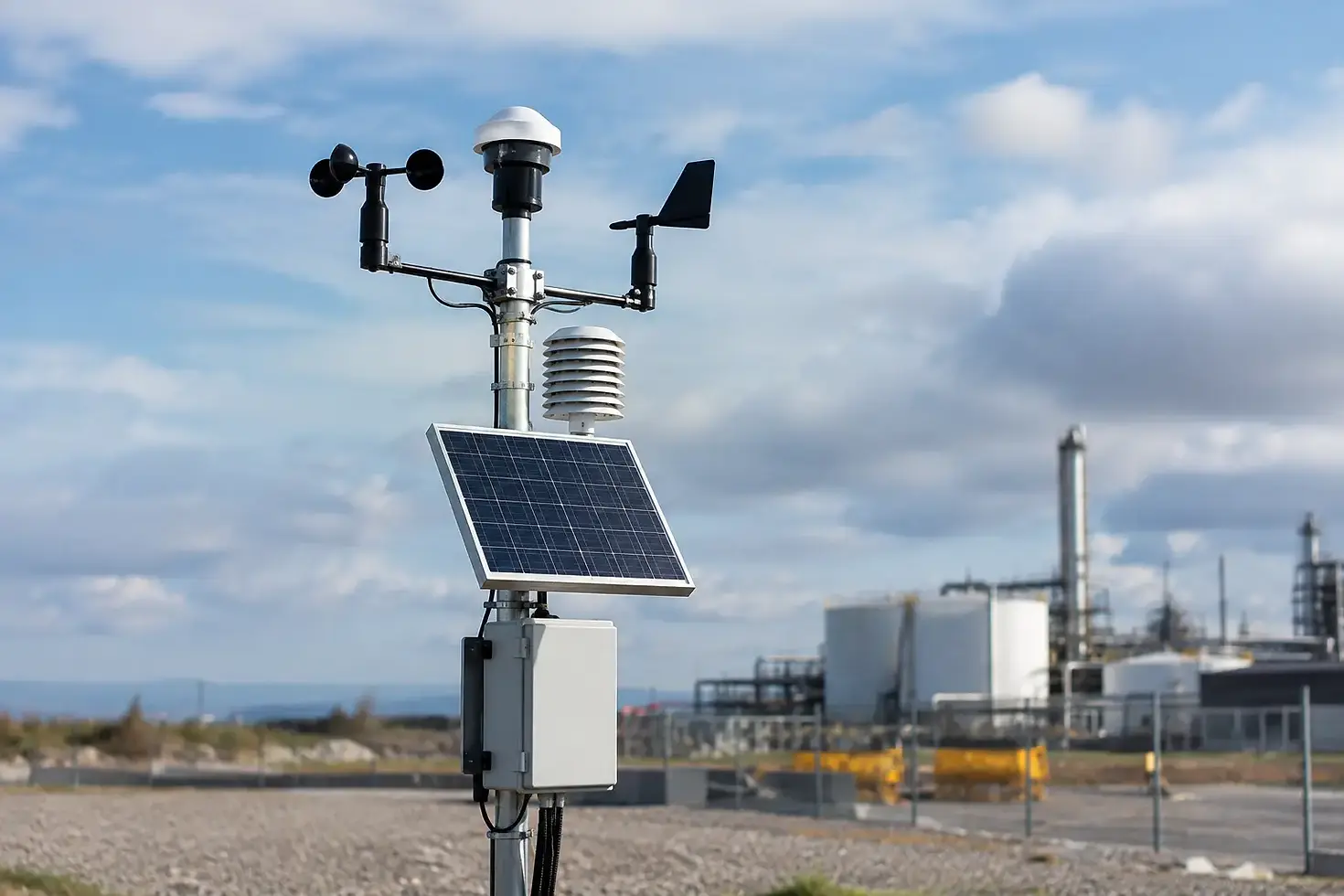
Best Rugged Weather Stations for Industrial Sites
A weather station that performs well beside an office building is not necessarily suitable for a mine, port, solar farm or remote construction project. The best rugged weather stations are selected for the decisions they support: when to stop work, secure plant, manage dust, protect crews, document conditions and restart safely. In industrial settings, a missed reading or delayed alert can create far more than a reporting gap. It can expose people, interrupt production and weaken the evidence available after an incident.
For safety and operations teams, the right system is not simply the station with the longest sensor list. It is a field-ready monitoring package built around site hazards, communications constraints, maintenance access and the actions your team must take when conditions change.
What makes a weather station genuinely rugged?
“Rugged” should mean more than a metal enclosure and a broad operating-temperature claim. A station deployed at an exposed industrial site must continue producing credible data through heat, heavy rain, salt air, dust loading, vibration, high winds and prolonged unattended operation.
Start with the mechanical design. Sensors, cabling, connectors, mounting hardware and the enclosure all need to suit the environment. Coastal terminals and offshore-adjacent facilities need corrosion resistance. Quarries, mines and road projects require equipment that tolerates dust and vibration. Wind-exposed towers, airfields and renewable energy assets need engineered mounting arrangements that remain stable without compromising measurement quality.
Sensor protection matters, but so does sensor placement. A station mounted too close to machinery exhaust, cooling equipment, buildings, stockpiles or reflective surfaces can provide misleading temperature, wind or rainfall data even if the hardware itself is performing perfectly. The installation must protect the equipment while preserving a representative measurement location.
Power and communications are equally important. A remote station may require solar power, battery autonomy and low-power communications that continue through short periods of poor weather. Sites with network access may prefer Ethernet, Wi-Fi, radio or cellular connectivity, often with local data storage as a safeguard if the connection drops out. The most suitable configuration depends on infrastructure, data frequency and the consequences of an outage.
Selecting the best rugged weather stations by operational risk
The best selection process starts with the site decision, not the catalogue. Ask what must happen when a threshold is reached, who receives the alert and what record is required afterwards.
Worker safety and severe weather response
For work at height, crane operations, aviation activity, marine operations and open-area workforces, wind speed, wind direction, rainfall, temperature, humidity and lightning risk can all affect safe work decisions. Live information is valuable only when it reaches the people responsible for acting on it.
A weather station can feed a dashboard, but an operational safety system should also support automated notifications and clear visual or audible alarms where required. A control room alert is useful; an alert that reaches supervisors, operators and exposed crews in time to follow a defined procedure is better. Where lightning is a significant threat, weather data should complement dedicated real-time lightning detection and storm alerting rather than attempt to replace it.
Environmental compliance and community impact
Weather conditions shape how dust, noise and emissions travel beyond a worksite. Wind direction and speed are especially relevant when investigating complaints, managing haul roads, blasting activity, crushing operations or bulk material handling. Rainfall and humidity can also explain changes in dust behaviour and support practical mitigation decisions.
For compliance teams, the station needs to create a defensible record. That means time-synchronised readings, consistent data capture, retained historical records and reports that can be reviewed against other monitoring streams. Pairing weather information with dust, noise, vibration or water-quality data gives investigators the context needed to assess an event rather than relying on a single isolated number.
Asset protection and continuity planning
Weather intelligence also protects equipment and production schedules. High winds can affect cranes, conveyors, stackers and temporary structures. Extreme heat can increase stress on electrical assets and people. Heavy rainfall may affect access roads, earthworks, drainage and stockpile stability.
The station should therefore fit into the site’s escalation procedures. An alert threshold without an agreed response creates alarm fatigue. Set thresholds that reflect the applicable work method, manufacturer limits, regulatory duties and local operating experience. Review them after significant events or seasonal changes.
Sensors to specify, and sensors to question
A core industrial weather station commonly measures air temperature, relative humidity, barometric pressure, wind speed, wind direction and rainfall. This combination provides useful baseline intelligence for most safety, operational and environmental applications.
Additional sensors should be specified only where they improve a real decision. Solar radiation may be valuable for heat-stress assessments, solar generation sites and agricultural operations. Wet-bulb globe temperature can support heat-management programmes where direct solar load affects personnel. Visibility, soil moisture, water level and surface temperature may be relevant for specialised infrastructure or environmental applications.
Wind measurement deserves particular attention. Cup anemometers, ultrasonic sensors and combined weather sensors each have trade-offs in moving parts, contamination tolerance, maintenance needs and performance in particular conditions. An ultrasonic wind sensor can reduce mechanical wear, but a site with persistent dust, insects or salt deposition still needs inspection and cleaning procedures. A simpler sensor may be appropriate where the required accuracy, maintenance access and operating environment support it.
Rainfall measurement also requires judgement. Tipping-bucket gauges are widely used, but debris, insects and intense rainfall can affect performance if the gauge is not maintained. Consider the expected rainfall profile, required resolution and cleaning access before choosing a sensor type.
Data quality is an operational requirement
A weather station is only as useful as the confidence your team has in its readings. Field hardware should provide stable measurements, but data quality is also determined by commissioning, calibration, preventative maintenance and verification.
Before handover, confirm the mast location, sensor height, orientation, levelling, cable routing, grounding and communications performance. Wind direction must be aligned correctly with true north or the site reference used by the system. Rainfall gauges must be level and clear of splashback. Solar-powered systems need an assessment of seasonal shading, not just midday sun.
After commissioning, establish a documented service schedule. It should cover cleaning, visual inspections, sensor checks, battery health, enclosure seals, mounting integrity and calibration or verification requirements. Frequency depends on the site. A clean, accessible facility may need less attention than a dusty quarry, corrosive port or cyclone-prone coastal asset.
Data validation rules are also worthwhile. Flagging impossible values, prolonged flat-line readings, communications outages and sudden sensor changes helps operators find faults before the data is needed for an incident review. Live data access should show the current condition clearly, while historical reporting should preserve the detail needed for audits, investigations and trend analysis.
Installation can determine whether the system succeeds
Even the highest-quality equipment cannot compensate for a poor installation. A weather station should be positioned away from local obstructions and artificial heat sources, with an unobstructed exposure appropriate to the measurements being taken. The correct location for wind monitoring may differ from the best location for a site office or a dust monitor, so the monitoring design may need more than one measurement point.
Mounting towers require the same engineering attention as the instruments themselves. Consider wind loading, footing design, access for maintenance, grounding, electrical protection and separation from nearby structures. At lightning-exposed sites, the station and its communications pathways should form part of the broader lightning protection and earthing design.
Installation planning should also address safe access. If a sensor can only be serviced by shutting down a critical area or mobilising elevated work equipment, maintenance will often be deferred. A practical maintenance arrangement protects long-term data availability.
Questions to ask before procurement
When comparing rugged weather stations, seek clear answers to these operational questions:
Which site hazards and decisions will this station support?
What accuracy, update interval and data retention period are required?
How will crews and supervisors receive alerts when thresholds are exceeded?
What power, communications and local data-storage safeguards are included?
How will calibration, maintenance, repairs and replacement sensors be managed?
Can the data be combined with lightning, dust, noise, vibration or water monitoring systems?
A supplier should be able to discuss the entire deployment, not just the sensor specifications. That includes site assessment, mounting, commissioning, live data access, alarm configuration, service support and reporting. For complex industrial sites, this integrated approach reduces gaps between environmental measurement and operational action.
Eeko Lightning Solutions applies this approach by pairing field-ready weather monitoring with storm alerting, environmental monitoring, installation, calibration and ongoing maintenance support. The objective is clear: provide timely site intelligence that helps teams protect people, assets and continuity of operations.
The right station will not eliminate severe weather, but it gives your team a dependable basis for acting before conditions become an incident. Choose the system around the decisions that matter most on your site, then maintain it with the same discipline applied to other critical safety equipment.


Comments